Indonesia Nov 12 - Dec 5, 2013
I have always thought Indonesia is just a group of islands that are constantly under the threat of natural disasters and civil unrests. When the tsunami hit Banda Aceh on Boxing Day 2004, I could not help but asked God why such catastrophe should fall upon these people. Well, my visit to Banda Aceh provided answers to questions in my mind.
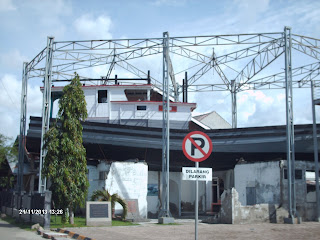
Banda Aceh had a lot of social problems and power struggles before the disaster. This port city had been on an economical decline for the last couple hundred years. Because of all the fighting going on, the city was already crumbling except for the mosques in pre-Tsunami times. I was informed by the staff at the Tsunami Museum that most of the city was rebuilt after the disaster. The government and NGO's also built houses for the homeless people. Reconstruction of roads and houses are still evident everywhere in the city. Because there were few resources left behind to fuel the in-fights after the tsunami, talks of being an independent state ceased too.
The three islands that I visited during my Indonesian journey are Sumatra, Java and Bali. Sumatra is the second largest island of the 1700 islands in the Indonesian territories. Sumatra is now the chief producer of Indonesian coffee. Java is the most populous island where 100,000 year old Java Man skeleton was discovered. I visited the Sangiran Museum and learned much about the Java Man in relation to Homo Erectus and Homo Sapiens. The other two important historic sites on Java island are the Borobudur (Buddhist) Temple which is some 40 km west of Yogyakarta. About 17 km east of Yogyakarta is the Prambanan (Hindu) Temples. Other than being a UNESCO site, Bali is a world class vacation spot, renowned for its unique Hindu temples and beautiful beaches. The other four UNESCO sites in Indonesia, that I did not visit, (from West to East) are Tropical Rainforest of Sumatra, Ujung Kulon National Park, Komodo National Park and Lorentz National Park respectively.

The foreign exchange rates are quite different from the international currency markets. When I received 10,950 IDR for every 1 CAD in the first licensed money changer office that I went into in Jakarta, I was already very happy because I could only get 10,800 IDR per 1 CAD in Canada. You could imagine how delighted I was when I changed more CAD's in a local bank in Banda Aceh, and the exchange rate was 1 CAD to 13,000 IDR minus a 3% commission. The Indonesian government could lose a lot of money when they buy the foreign currencies from the banks.
Just when I thought smoking is prevalent in Malaysia, smoking is an integral part of Indonesian life. A pack of cigarettes costs less than $1.00 USD in Indonesia. In all my travels, I have not seen as many chain smoker drivers as in Indonesia. I should know because I was always assigned the front seats right behind the driver. Even though Philip Morris bought the leading cigarette company, Sempoerna out a few years back, the national brand, Dji Sam Soe still has the majority market share. The unfiltered, hand rolled, cut and packaged kredit cigarettes remain the most popular choice of the older Indonesian smokers. Kredit cigarettes are tobacco blended with cloves and other secret spices.

Bali has always been in the TOP TEN list for having the most beautiful beaches in the world. In spite of the onslaught of tourists, most places on the island are kept pretty intact from the outside world. I was swarmed by aggressive taxi drivers when I arrived in the bus terminal in Mengwi around 10 p.m. I walked to the nearest police station and asked for assistance. A handsome policeman drove me to my guesthouse in Kuta. Prices in Kuta are still relatively low given that there are so many world class resorts and 5-star hotels. Transportation is a major issue in Bali. Unless you rent a car, your travels are limited by the sporadic bus schedules.

In many ways, Indonesia has exceeded my expectations. Even though I have sworn not to buy any souvenirs on this trip, I could not help but bought 4 tops, 1 batik jacket, 1 batik sarong and 1 pair of leather sandals in Indonesia because they are so beautiful and inexpensive. One of these days, I will return and travel to the eastern islands of Indonesia.
I have always thought Indonesia is just a group of islands that are constantly under the threat of natural disasters and civil unrests. When the tsunami hit Banda Aceh on Boxing Day 2004, I could not help but asked God why such catastrophe should fall upon these people. Well, my visit to Banda Aceh provided answers to questions in my mind.
Banda Aceh had a lot of social problems and power struggles before the disaster. This port city had been on an economical decline for the last couple hundred years. Because of all the fighting going on, the city was already crumbling except for the mosques in pre-Tsunami times. I was informed by the staff at the Tsunami Museum that most of the city was rebuilt after the disaster. The government and NGO's also built houses for the homeless people. Reconstruction of roads and houses are still evident everywhere in the city. Because there were few resources left behind to fuel the in-fights after the tsunami, talks of being an independent state ceased too.

The three islands that I visited during my Indonesian journey are Sumatra, Java and Bali. Sumatra is the second largest island of the 1700 islands in the Indonesian territories. Sumatra is now the chief producer of Indonesian coffee. Java is the most populous island where 100,000 year old Java Man skeleton was discovered. I visited the Sangiran Museum and learned much about the Java Man in relation to Homo Erectus and Homo Sapiens. The other two important historic sites on Java island are the Borobudur (Buddhist) Temple which is some 40 km west of Yogyakarta. About 17 km east of Yogyakarta is the Prambanan (Hindu) Temples. Other than being a UNESCO site, Bali is a world class vacation spot, renowned for its unique Hindu temples and beautiful beaches. The other four UNESCO sites in Indonesia, that I did not visit, (from West to East) are Tropical Rainforest of Sumatra, Ujung Kulon National Park, Komodo National Park and Lorentz National Park respectively.

The foreign exchange rates are quite different from the international currency markets. When I received 10,950 IDR for every 1 CAD in the first licensed money changer office that I went into in Jakarta, I was already very happy because I could only get 10,800 IDR per 1 CAD in Canada. You could imagine how delighted I was when I changed more CAD's in a local bank in Banda Aceh, and the exchange rate was 1 CAD to 13,000 IDR minus a 3% commission. The Indonesian government could lose a lot of money when they buy the foreign currencies from the banks.
Just when I thought smoking is prevalent in Malaysia, smoking is an integral part of Indonesian life. A pack of cigarettes costs less than $1.00 USD in Indonesia. In all my travels, I have not seen as many chain smoker drivers as in Indonesia. I should know because I was always assigned the front seats right behind the driver. Even though Philip Morris bought the leading cigarette company, Sempoerna out a few years back, the national brand, Dji Sam Soe still has the majority market share. The unfiltered, hand rolled, cut and packaged kredit cigarettes remain the most popular choice of the older Indonesian smokers. Kredit cigarettes are tobacco blended with cloves and other secret spices.

Bali has always been in the TOP TEN list for having the most beautiful beaches in the world. In spite of the onslaught of tourists, most places on the island are kept pretty intact from the outside world. I was swarmed by aggressive taxi drivers when I arrived in the bus terminal in Mengwi around 10 p.m. I walked to the nearest police station and asked for assistance. A handsome policeman drove me to my guesthouse in Kuta. Prices in Kuta are still relatively low given that there are so many world class resorts and 5-star hotels. Transportation is a major issue in Bali. Unless you rent a car, your travels are limited by the sporadic bus schedules.

In many ways, Indonesia has exceeded my expectations. Even though I have sworn not to buy any souvenirs on this trip, I could not help but bought 4 tops, 1 batik jacket, 1 batik sarong and 1 pair of leather sandals in Indonesia because they are so beautiful and inexpensive. One of these days, I will return and travel to the eastern islands of Indonesia.


